As a singer, I have had the best teachers, who have nurtured and helped me grow. It was these teachers, and their impact, who inspired me to become a voice teacher. At a young age, a visiting professor at my high school showcased the ability to sing many styles — jazz, pop, musical theatre, and classical. She showed that voice lessons are less about learning classical music and more about learning the voice and the techniques that are applicable to most Western styles. She believed that learning the foundations and functions of classical voice is the best way to build a broad experience and skill for a wide variety of vocal styles. It is this kind of outlook and experience that I wish to impart on my students.
My central focus in voice lessons is to first teach my students efficient and effective vocal mechanics, while at the same time providing them with the tools to become a well-rounded musician — with knowledge in music theory, storytelling, aural skills, sight reading, and singing in various languages. It is important for the student and teacher to define and work towards short- and long-term goals to keep us on track. It is also important to remember that building these skills takes time. However, it is necessary to push my students the comfortable amount to help them achieve their goals, wants, and needs. Each student is unique and will require different, individual goals. I believe every student needs something different from their teacher, whether that is a different explanation, a different method, or a different approach — every student’s personality, and the vocal hurdles they experience, are situational.
An essential part of voice teaching is building a relationship built on trust. Students should expect that I’m going to come prepared, be knowledgeable, and lead them in their vocal journey. Trust and belief in my students builds confidence — in our relationship, and in the individual student and their abilities. Trust in the relationship allows for feedback that is constructive rather than hurtful, once we can both fully understand each other. I like to try exercises and techniques that are fun and outside the box, but first we must build a trustworthy relationship. With more trust in each other, trying new things becomes easier.
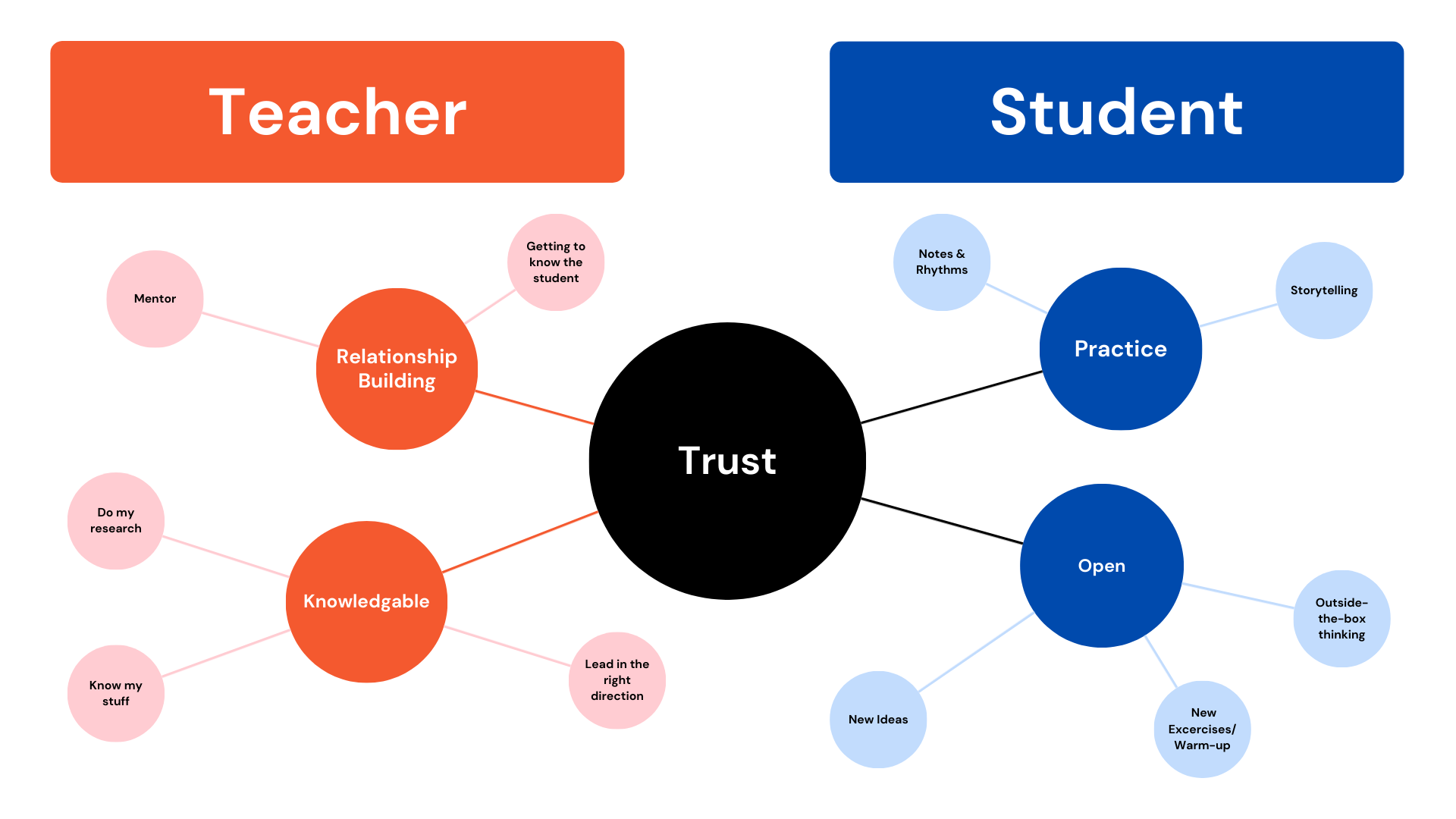
With trust comes expectations, however. I expect that my students will practice consistently and come to their voice lessons with an open mind and interest in what they will learn. I’m also very understanding and empathetic if a student has had a busy week or has other things happening in their life — each personality and situation calls for a different response. Just as there is an expectation that I teach the student proper voice mechanics and skills, I expect the student to practice their music and complete their homework.